

Smart lock door compatibility
Learn what distributors should check before ordering smart locks, including door thickness, lock body, backset, latch size and installation support.
segulock
6/23/20269 min read
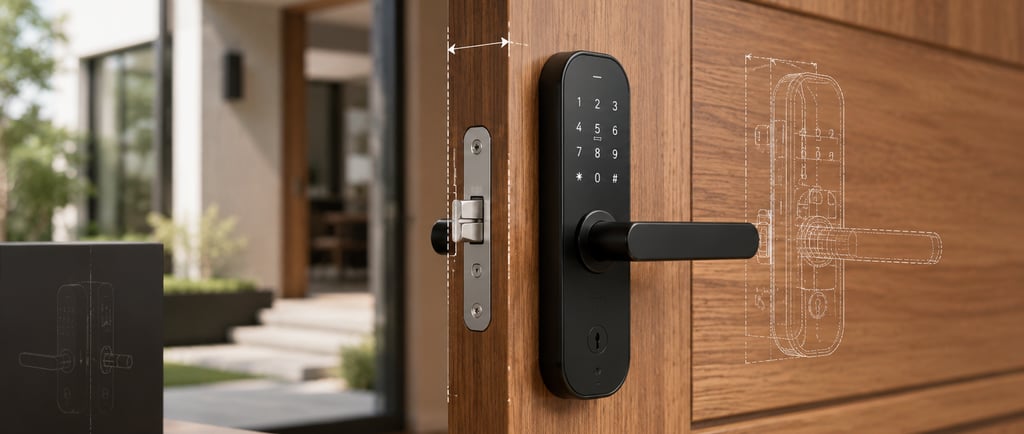
Smart Lock Door Compatibility: What Buyers Should Check Before Ordering
A smart lock can look perfect in a catalog and still fail during installation.
For distributors, importers, and project buyers, the main risk is often not the fingerprint sensor, keypad, or mobile app. It is the door itself. The wrong door thickness, backset, mortise, opening direction, or panel clearance can turn a good product into an installation problem.
That is why smart lock door compatibility should be checked before you approve samples or place a bulk order.
This guide explains the measurements and door details buyers should confirm, how retrofit projects differ from new construction, and what information to send your supplier before selecting a smart lock.
What Determines Smart Lock Door Compatibility?
Smart lock compatibility mainly depends on the physical structure of the door and the locking system already installed.
Before selecting a model, check:
Door material
Door thickness
Backset
Existing latch or mortise
Existing holes
Door handing and opening direction
Available panel clearance
Strike plate position
Indoor or outdoor installation environment
Do not assume that one smart lock can fit every door.
Even two doors that look similar from the outside may use different lock bodies or installation dimensions.
For B2B buyers, compatibility becomes even more important because one wrong selection can affect dozens, hundreds, or even thousands of doors.
1. Identify the Door Type and Material
Start with the basic door structure.
Common smart lock applications include:
Wooden doors
Metal doors
Security doors
Aluminum profile doors
Apartment entrance doors
Hotel doors
Office doors
Outdoor gates
Door material alone does not determine whether a smart lock will fit, but it affects how the lock can be installed.
For example, a wooden door may allow relatively easy drilling and modification. A steel security door may already contain a large mortise lock body that needs to be matched carefully.
Aluminum doors create another challenge. The profile may be narrow, so the front and rear panels of a standard smart lock may be too wide.
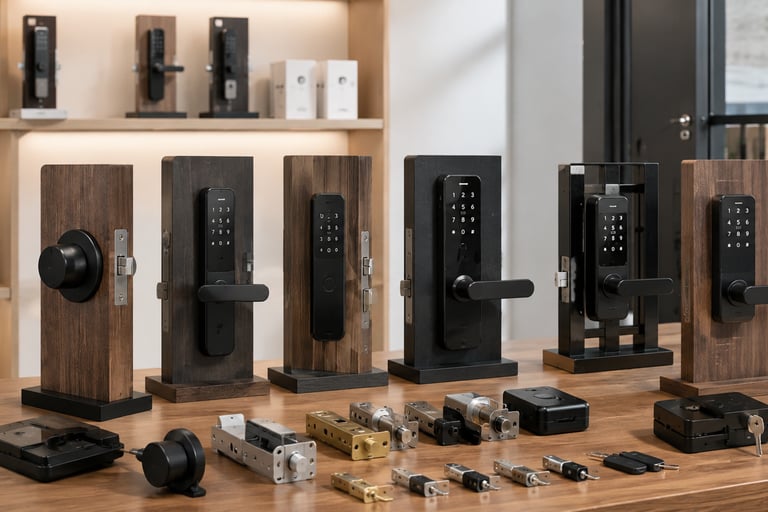
Before choosing from different types of smart locks, buyers should first understand the structure of the target door.
Buyer Tip
Do not tell a supplier only:
“We need a smart lock for metal doors.”
Instead, provide photos and measurements.
Two metal doors can require completely different lock configurations.
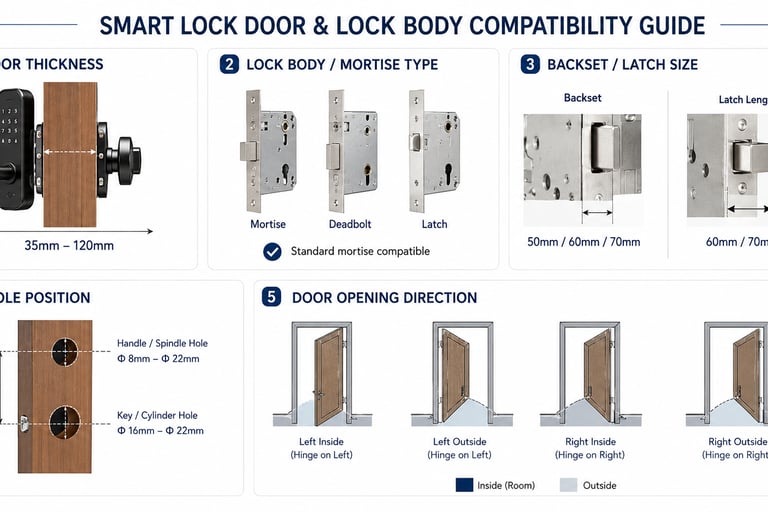
2. Measure the Door Thickness
Door thickness is one of the first measurements you should confirm.
Measure the thickness of the door itself at the lock installation area, excluding decorative trim unless it affects installation.
Record the measurement in millimeters.
For example:
Door thickness: 45 mm
Different smart lock models support different thickness ranges. A lock designed for a relatively thin residential door may require different screws, spindles, or accessories when installed on a thick entrance door.
This is why buyers should not use one universal door thickness specification for an entire smart lock product range.
Before ordering, confirm:
Minimum supported door thickness
Maximum supported door thickness
Available spindle lengths
Screw lengths
Whether extension accessories are available
If you are sourcing for several markets, collect the common door thickness ranges in each market before finalizing your product selection.
For distributors, this can reduce installation complaints after the products reach customers.
3. Measure the Backset
Backset is another critical measurement.
In simple terms, backset is the horizontal distance from the edge of the door to the center line of the main lock mechanism, spindle, or bore position.
The exact measurement method depends on the lock structure.
For tubular latches and deadbolts, you usually need to identify the distance between the door edge and the center of the lock bore.
For mortise systems, the relevant backset is normally part of the mortise specification.
Why does this matter?
If the backset does not match the lock design:
The latch may not align with the existing hole
The front panel may sit in the wrong position
Existing drilling may not be reusable
The handle may interfere with the frame
Additional door modification may be required
For replacement projects, backset is especially important because buyers are often trying to reuse existing door preparation.
For new construction, the process is easier because the door can be prepared according to the selected lock drawing.
4. Check the Existing Latch, Deadbolt, or Mortise
One of the most common sourcing mistakes is focusing only on the smart lock panel.
The internal lock body matters just as much.
Your existing door may use:
Tubular latch
Deadbolt
Standard mortise
Large security mortise
Multipoint locking mechanism
Narrow-profile mortise
If the project uses mortise locks, ask for more than one measurement.
Depending on the lock structure, useful information can include:
Mortise case dimensions
Backset
Center distance
Faceplate dimensions
Spindle position
Cylinder position
Screw-hole positions
Strike plate dimensions
A photo of the door edge is often one of the fastest ways to identify the existing lock structure.
If the mortise can be removed safely, also send a clear photo of the complete lock body next to a ruler or measuring tape.
Do Not Guess the Mortise
A buyer may say:
“It looks like a standard mortise.”
That is not enough for a bulk order.
A few millimeters of difference can change the installation result.
5. Check Existing Holes and Panel Clearance
Retrofit projects need more attention than new doors because the existing door may already have:
Handle holes
Cylinder holes
Screw holes
Deadbolt holes
Mortise cutouts
Decorative marks from the old lock
The new smart lock must either reuse these holes or cover them properly.
Measure the existing hole positions and compare them with the installation drawing of the new lock.
Also check panel clearance.
A smart lock may technically fit the door thickness but still create problems if:
The front panel is too wide
The handle touches the door frame
The rear panel hits decorative trim
The lock body is too large for a narrow aluminum profile
This is especially important for aluminum and narrow-stile doors.
For these doors, measure the usable width of the door profile, not only the overall width of the door.
6. Confirm Door Handing and Opening Direction
Before ordering, confirm how the door opens.
Useful information includes:
Left-hand or right-hand opening
Inward or outward opening
Some smart locks allow the handle direction to be adjusted during installation.
Others may require a specific configuration.
Do not assume every model is reversible.
For distributors, this should also be considered when planning inventory. If a product requires different left-hand and right-hand versions, stock management becomes more complicated.
For project orders, provide a door schedule showing the handing of each door before production.
7. Check the Strike Plate and Door Frame
Compatibility does not end with the lock itself.
The latch or bolt must enter the strike plate smoothly when the door closes.
Check:
Strike plate position
Door-to-frame gap
Latch alignment
Bolt depth
Frame material
A smart lock can be installed correctly on the door but still perform poorly if the bolt rubs heavily against the strike.
This may lead to:
Difficult locking
Incomplete locking
Higher motor load
Faster battery consumption
User complaints
Before blaming the electronic system, always check the mechanical alignment of the door and frame.
Match the Smart Lock Type to the Door Structure
Different door structures often suit different lock designs.
Door or Existing LockPossible Smart Lock DirectionMain Buyer CheckStandard tubular doorSmart lever or knob lockBackset and bore positionsExisting deadbolt doorSmart deadboltBore diameter and backsetMortise entrance doorSmart mortise lockFull mortise dimensionsNarrow aluminum doorSlim smart lockProfile width and panel clearanceThick security doorCompatible entrance smart lockThickness, spindle and mortiseMultipoint locking doorSpecialized solutionExisting mechanism and compatibility
This table should be used as an initial selection guide, not as a guarantee of compatibility.
The final model should still be checked against actual door measurements.
You can also review SEGULOCK's wholesale smart lock options when comparing different lock structures for your market.
Retrofit Projects vs New Door Projects
The compatibility process changes depending on whether the doors already exist.
Existing Door Retrofit
For retrofit projects, the goal is usually to minimize modification.
Check:
Existing mortise
Existing holes
Backset
Strike plate
Old lock panel footprint
Door handing
Available clearance
A smart lock that requires major drilling may increase labor costs even if the unit price is attractive.
For hotel, apartment, or office retrofit projects, installation cost should therefore be considered as part of the total purchasing cost.
New Door Projects
New construction gives buyers more flexibility.
A better sequence is:
Select the smart lock configuration.
Confirm the lock body and installation dimensions.
Obtain the technical drawing.
Send the drawing to the door supplier.
Prepare doors according to the approved lock specification.
Install and test samples before full production.
This can reduce modification work on site.
Smart Lock Door Compatibility Checklist for B2B Buyers
Before requesting a final quotation or confirming a model, prepare the following information.
Buyer CheckInformation to ProvideDoor materialWood, metal, aluminum, security door, etc.Door thicknessMeasurement in mmBacksetMeasurement in mmExisting lock bodyPhoto and dimensionsOpening directionLeft/right and inward/outwardDoor edgeClear photoExisting holesPhotos and measurementsDoor framePhoto of strike areaInstallation environmentIndoor or outdoorDestination marketCountry or regionOrder typeSample, trial order, or bulk orderProject quantityEstimated number of doors
This information gives the supplier a much better basis for recommending a suitable model.
It also makes your quotation request more accurate.
For a broader RFQ process, see our smart lock wholesale quotation guide.
What Photos Should You Send a Smart Lock Supplier?
If you are unsure about compatibility, photos are often more useful than a short written description.
Send at least these five views:
1. Full Outside View
Show the complete exterior side of the door and the existing lock.
2. Full Inside View
Show the interior side and available installation space.
3. Door Edge
This helps identify the latch, deadbolt, mortise, and faceplate.
4. Existing Lock Body
If possible, photograph the mortise or latch separately with measurements.
5. Strike Plate and Door Frame
This helps evaluate latch position, frame clearance, and alignment.
Avoid sending only close-up photos with no scale.
Whenever possible, include a ruler or measuring tape in the image.
Test the Smart Lock on a Real Door Before Bulk Ordering
Correct measurements reduce risk, but measurements alone should not replace sample installation.
For B2B projects, a safer process is:
Door measurements → Model selection → Compatibility review → Sample → Real-door installation → Bulk order
Install the sample on the same type of door used in your target market or project.
Then test:
Latch movement
Deadbolt movement
Handle operation
Door closing
Locking and unlocking
Mechanical key access
Fingerprint or keypad operation
App functions
Emergency power function
Clearance around the door frame
A product can perform well on a workbench and still encounter problems after installation.
That is why compatibility testing should be included in your broader smart lock sample testing process.
One Sample Door Is Not Always Enough
For a small residential order, one target door may be sufficient for initial validation.
For a hotel or apartment project, however, the building may contain several door types.
For example:
Main entrance doors
Apartment doors
Service doors
Office doors
Aluminum common-area doors
Create a door schedule before assuming one smart lock model can cover the whole project.
Common Smart Lock Compatibility Problems
The Door Is Too Thick
The standard spindle or screws may be too short.
Ask whether longer accessories are available before changing the lock model.
The Backset Does Not Match
The latch or mortise position may not align with the existing preparation.
Additional drilling or another lock body may be required.
The Mortise Does Not Fit
Similar-looking mortises can have different case sizes, backsets, centers, and faceplates.
Compare dimensions rather than appearance.
The Smart Lock Panel Hits the Frame
This is common on narrow doors or doors with limited clearance.
Check panel width and handle movement before approval.
Old Holes Remain Visible
A replacement smart lock may not fully cover the footprint of the previous lock.
Request panel dimensions before installation.
The Strike Plate Is Misaligned
The motor may appear weak when the real problem is mechanical friction between the bolt and strike.
Test lock operation both with the door open and closed.
The Opening Direction Is Wrong
Confirm handing before production, especially if the model is not universally reversible.
The Aluminum Profile Is Too Narrow
A normal smart lock panel may not fit even when door thickness is acceptable.
For aluminum doors, profile width should be treated as a separate measurement.
What Should a Smart Lock Supplier Provide Before You Order?
Door compatibility is easier to manage when the supplier provides clear technical information.
Before finalizing a model, ask for available documents such as:
Product dimension drawing
Mortise or lock body drawing
Installation template
Supported door thickness range
Backset options
Available spindle lengths
Installation manual
Installation video
Sample availability
For large projects, confirm the final lock configuration in writing before mass production.
This is also important for reducing future smart lock after-sales problems.
A strong after-sales process starts before the order is shipped.
FAQ
Can a smart lock fit any door?
No. Compatibility depends on door thickness, lock preparation, backset, mortise or latch type, opening direction, panel clearance, and other structural details. Always check the specific smart lock against the target door before ordering.
What door thickness is suitable for a smart lock?
There is no universal thickness range for all smart locks. Supported door thickness varies by model, spindle length, screw configuration, and lock structure. Measure your door and compare it with the specifications of the exact model you plan to purchase.
How do I measure the backset for a smart lock?
For many tubular latches and deadbolts, backset is measured from the edge of the door to the center of the main lock bore. Mortise locks may use different measurement references, so confirm the supplier's technical drawing before ordering.
Can a smart lock replace an existing mortise lock?
Possibly, but the new mortise must be checked against the existing door preparation. Compare the case size, backset, center distance, faceplate, spindle position, screw holes, and strike arrangement before assuming the replacement will fit.
Can smart locks be installed on metal or aluminum doors?
Many smart locks can be installed on metal or aluminum doors, but compatibility depends on the specific door structure. Aluminum doors may require narrow-profile locks, while metal security doors may use special mortise systems.
What information should I send a smart lock supplier before ordering?
Send clear door photos, door thickness, backset, existing lock-body information, opening direction, installation environment, destination market, and estimated quantity. For retrofit projects, also include photos and measurements of existing holes and the strike plate.
Not Sure Which Smart Lock Fits Your Door?
Incorrect door compatibility can turn into installation delays, returns, and unnecessary after-sales costs.
Before placing a sample or bulk order, send SEGULOCK your:
Door photos
Door thickness
Existing lock or mortise dimensions
Opening direction
Installation environment
Required quantity
We can use this information to help identify suitable smart lock options for further sample evaluation.
Send Your Door Specifications
Get in touch
Address
Room 3060, Area C, No. 544 YaYun Avenue, Dalong Street, Panyu District, Guangzhou, Guangdong Province, China