

Fully Automatic vs Semi-Automatic Smart Locks
Compare fully automatic and semi-automatic smart locks. Learn the difference in locking method, installation, battery use and wholesale selection.
segulock
7/2/20263 min read
Fully Automatic vs Semi-Automatic Smart Locks: What Is the Difference?
When choosing smart locks for wholesale, distribution or project supply, buyers often compare fully automatic smart locks and semi-automatic smart locks. Both types can support modern access methods such as fingerprint, password, card, app control and mechanical key backup, but their locking structure and user experience are different.
For importers, distributors and project buyers, understanding the difference can help select the right models for homes, apartments, offices, villas and local hardware channels.
Nasentons provides smart locks, mechanical locks, door hardware and related security products for importers, distributors and project buyers.
What Is a Fully Automatic Smart Lock?
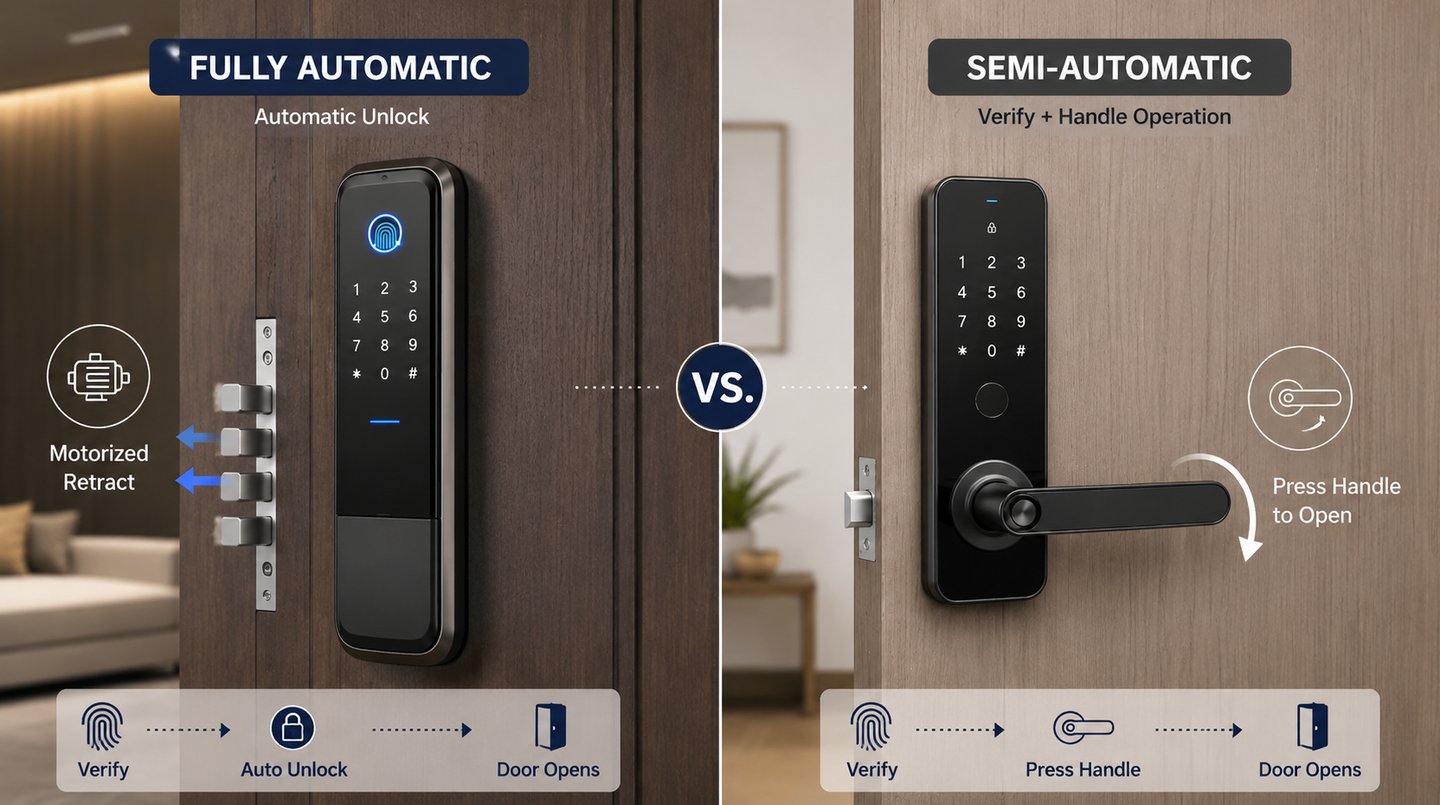
A fully automatic smart lock uses a motorized mechanism to lock and unlock automatically after user verification. After the user enters a fingerprint, password, card or app command, the motor drives the locking mechanism without requiring the user to press or lift the handle manually.
Fully automatic models usually offer a more premium user experience. They are often suitable for:
Villas
Main entrance doors
Apartments
Higher-end residential projects
Smart home channels
Customers who prefer more convenient operation
Because fully automatic smart locks include more electronic and motorized components, buyers should pay attention to battery capacity, lock body compatibility, installation quality and after-sales support.
What Is a Semi-Automatic Smart Lock?
A semi-automatic smart lock usually requires the user to verify first, then press or lift the handle to open or lock the door. It combines digital access with a more familiar mechanical operation.
Semi-automatic smart locks are widely used because they are practical, stable and easier to adapt to many door types. They are suitable for:
Homes
Apartments
Offices
Hardware stores
Residential wholesale channels
Entry-level and mid-range smart lock markets
For distributors, semi-automatic models are often easier to sell in larger quantities because they usually offer a good balance between function, cost and installation compatibility.
Key Differences Between Fully Automatic and Semi-Automatic Smart Locks
ComparisonFully Automatic Smart LockSemi-Automatic Smart LockLocking methodMotorized locking and unlockingVerification + handle operationUser experienceMore premium and convenientPractical and familiarBattery useUsually higher power demandUsually lower power demandInstallationRequires careful compatibility checkOften easier to adaptMarket positionMid-to-high-end productsWider wholesale marketSuitable usersPremium homes, villas, projectsHomes, apartments, offices, retail
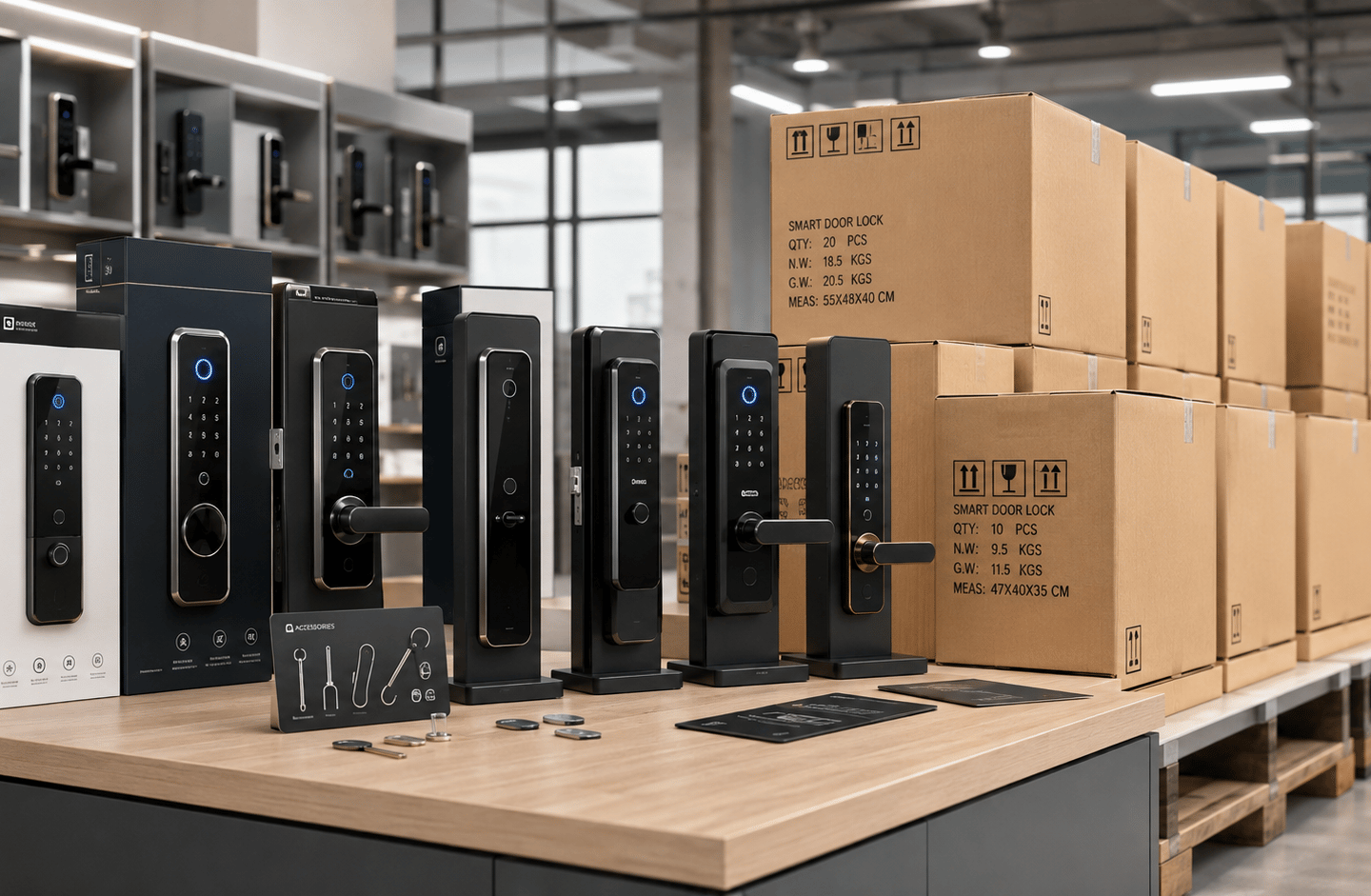
Before ordering smart locks in bulk, distributors should confirm door thickness, lock body compatibility, battery design, emergency power supply, mechanical key backup and after-sales support.
Which Type Is Better for Distributors?
There is no single best choice. The right smart lock type depends on the target market.
Choose fully automatic smart locks if your customers care about premium design, convenience, smart home experience and higher-value positioning.
Choose semi-automatic smart locks if your market needs practical models, easier installation, wider door compatibility and more competitive pricing.
For many smart lock distributors, keeping both options is a better strategy. Fully automatic models can serve premium customers and project buyers, while semi-automatic models can support broader wholesale and retail channels.
FAQ About Fully Automatic and Semi-Automatic Smart Locks
Is a fully automatic smart lock better than a semi-automatic smart lock?
Not always. Fully automatic smart locks offer a more premium experience, while semi-automatic smart locks are often more practical for wider wholesale markets.
Which type is easier to install?
Semi-automatic smart locks are usually easier to adapt to different doors, but the exact result depends on door thickness, lock body and installation structure.
Which type is more suitable for wholesale?
Semi-automatic smart locks are often suitable for larger wholesale markets. Fully automatic models are better for higher-end product lines and project customers.
Choose the Right Smart Lock Type for Your Market
Fully automatic and semi-automatic smart locks serve different customer needs. For B2B buyers, the best choice should match the door type, sales channel, budget level and local installation habits.
If you are looking for fully automatic smart locks, semi-automatic smart locks or OEM smart lock solutions, contact Nasentons with your target market, quantity, door type and required functions. Our team can help recommend suitable models and prepare a wholesale quotation for your business.
Get in touch
Address
Room 3060, Area C, No. 544 YaYun Avenue, Dalong Street, Panyu District, Guangzhou, Guangdong Province, China